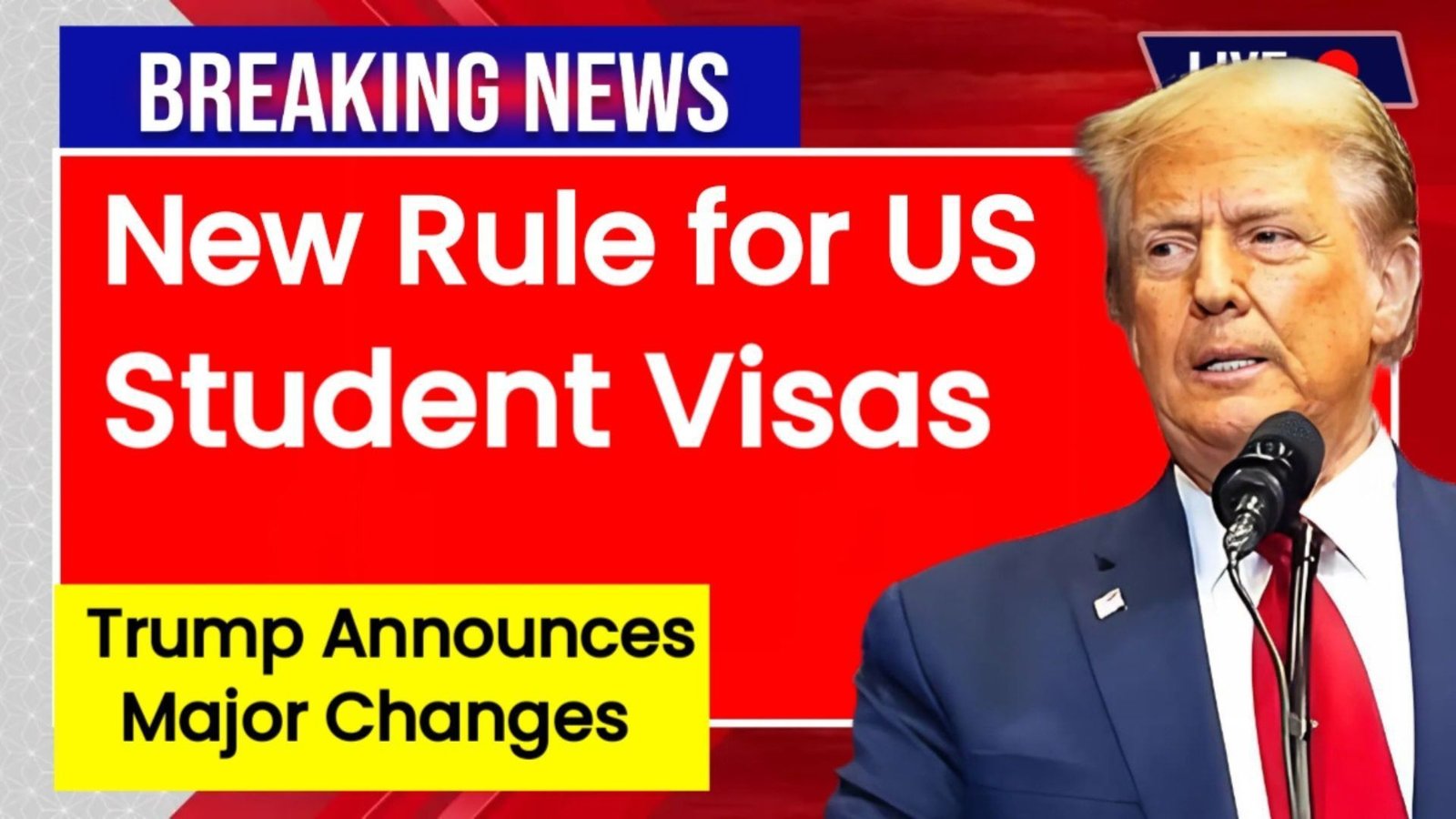
Imagine dreaming of studying at a top U.S. university, only to face a sudden four-year cap on your stay—welcome to the Trump administration’s bold pivot on Trump student visa changes 2025. Announced via the Department of Homeland Security’s regulatory agenda in mid-November 2025, this proposed overhaul targets F-1 visa rules for academic students, J-1 visa updates for exchange visitors, and M-1 visa updates for vocational trainees. Aimed at curbing abuse and boosting national security, the rules could upend plans for over a million international students from India, China, and beyond. With implementation looming early next year, prospective scholars must act fast to navigate these shifts.
What Are the New Student Visa Rules?
The core of these Trump student visa changes 2025 is a shift from indefinite “duration of status” to fixed periods, ending the era of “eternal students” who linger without checks. Under the proposal, F-1 visa rules would limit stays to the program’s length, capped at four years, requiring extensions via USCIS reviews. J-1 visa updates for researchers and au pairs tighten oversight on exchanges, while M-1 visa updates curb vocational programs’ flexibility. Grace periods post-study shrink from 60 days to 30, pressuring transitions to work visas like OPT or H-1B. This isn’t just paperwork—it’s a recalibration to protect U.S. jobs and vetting, though critics warn it could deter global talent.
Who Will These Changes Affect Most?
International undergrads in short programs might dodge the worst, but PhD candidates in engineering or medicine face real hurdles under the four-year F-1 visa rules cap. J-1 visa updates hit scholars and trainees hardest, potentially slashing cultural exchanges by mandating frequent reapplications. Vocational seekers on M-1 visa updates could see fewer hands-on opportunities, as schools rethink programs amid compliance fears. Low-income students from high-risk countries may struggle more with added scrutiny, while elite talents eyeing O-1 visas find a silver lining.
Key Eligibility Shifts
To qualify under tightened student visa eligibility 2025 standards: Hold a confirmed SEVP-certified program enrollment. Prove non-immigrant intent with strong home ties. Undergo enhanced background checks—no more lax “duration of status.” Exemptions rare, but national interest cases (e.g., critical STEM) could apply.
Impact by Visa Type
| Visa Type | Main Change | Affected Groups |
|---|---|---|
| F-1 | 4-Year Cap | Undergrad/Grad Students |
| J-1 | Stricter Monitoring | Researchers, Au Pairs |
| M-1 | 30-Day Grace | Vocational Trainees |
Timeline for Implementation
The proposal hit the Federal Register in August 2025, but mid-November updates signal a fast track—final rules could drop by January 2026. Current holders get grace until expiration, but new applicants face rules immediately. Transfers or program switches? Expect delays from extra DHS reviews. Comment periods close soon, so public input could tweak the edges before enforcement ramps up.
How to Prepare for the Changes
Prospective students, start by verifying SEVIS certification and gathering ironclad financial proofs now. For extensions, file I-539 forms early via USCIS to beat backlogs. Advisors urge building H-1B or O-1 portfolios from day one, especially for STEM grads eyeing OPT. Consult immigration lawyers—don’t rely on forums. Track updates on USCIS.gov or State.gov to avoid visa denials mid-application.
Why These Reforms Are Happening Now
National security tops the list: Officials cite over 2,100 “perpetual” F-1 holders from 2000-2010 as abuse examples, arguing lax rules enable fraud and job theft. With U.S. arrivals down 50% for Indian students in July 2025 alone, the admin frames this as protecting American grads in a tight job market. Yet, universities decry a brain drain risk, as global rivals like Canada lure talent with friendlier policies.
FAQs – Trump Student Visa Changes 2025
- When do the Trump student visa changes 2025 take effect? Proposed for early 2026; current visas unaffected until expiry.
- Will the four-year cap apply to all F-1 visa rules programs? Yes, unless extended via DHS approval for longer studies like PhDs.
- How do J-1 visa updates impact exchange programs? More reporting and shorter grace periods—plan transitions meticulously.
- Can M-1 visa updates still lead to work opportunities? Yes, but with tighter timelines; OPT remains an option for vocational grads.
- What’s the outlook for student visa eligibility 2025 from high-risk countries? Enhanced vetting—apply early and document ties strongly.
Conclusion
The Trump administration’s Trump student visa changes 2025 mark a seismic shift for F-1 visa rules, J-1 visa updates, and M-1 visa updates, trading flexibility for security in a bid to safeguard U.S. interests. While it promises tighter controls against abuse, the four-year caps and slashed grace periods could sideline ambitious scholars mid-journey. International students, don’t panic—pivot to robust planning and expert guidance now. Monitor official channels like DHS.gov for final tweaks, and remember: America’s allure endures, but adapting smartly is key to unlocking it.